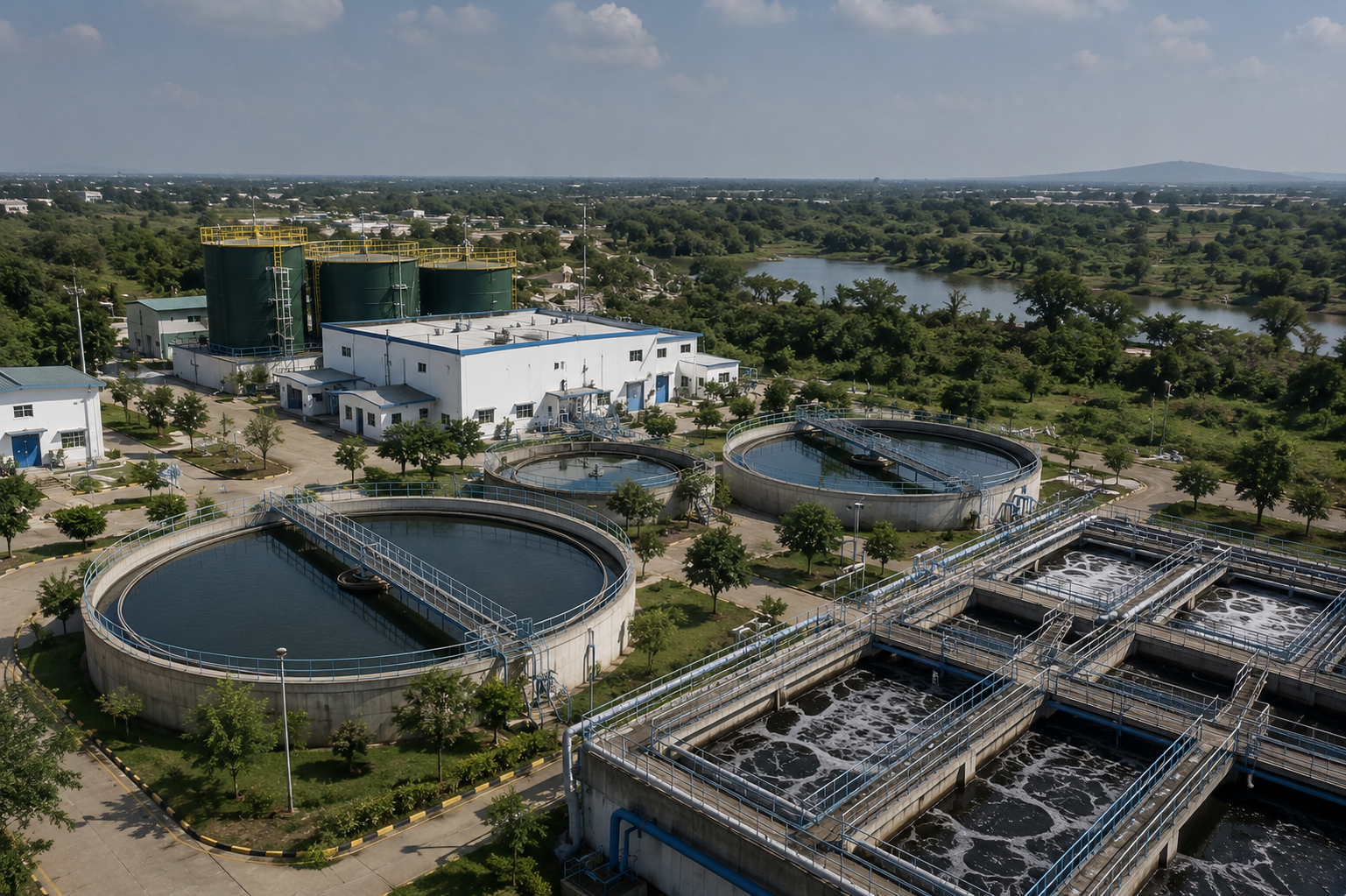
CleanTech Innovations
Kaashyap CleanTech Innovations Pvt Ltd
.....Innovating Future Fuels for Land, Sea and Air Transportation.
Home/CleanTech Innovations
.....Innovating Future Fuels for Land, Sea and Air Transportation.
Our biological green methanol technology produces clean fuel by utilising byproducts already generated inside sugar factories and ethanol plants - converting fermenter CO₂ and raw biogas into green methanol under normal operating conditions.
Developed through extensive research and now at commercial readiness, the process creates additional value from existing resources, making it ideally suited to integrated sugar and ethanol complexes.
The technology is a solution for CCUS ( Carbon Capture Utilisation and Storage) for hard to abate industries such as Cement , Steel , Aluminum, Chemicals , Fertilizers etc...
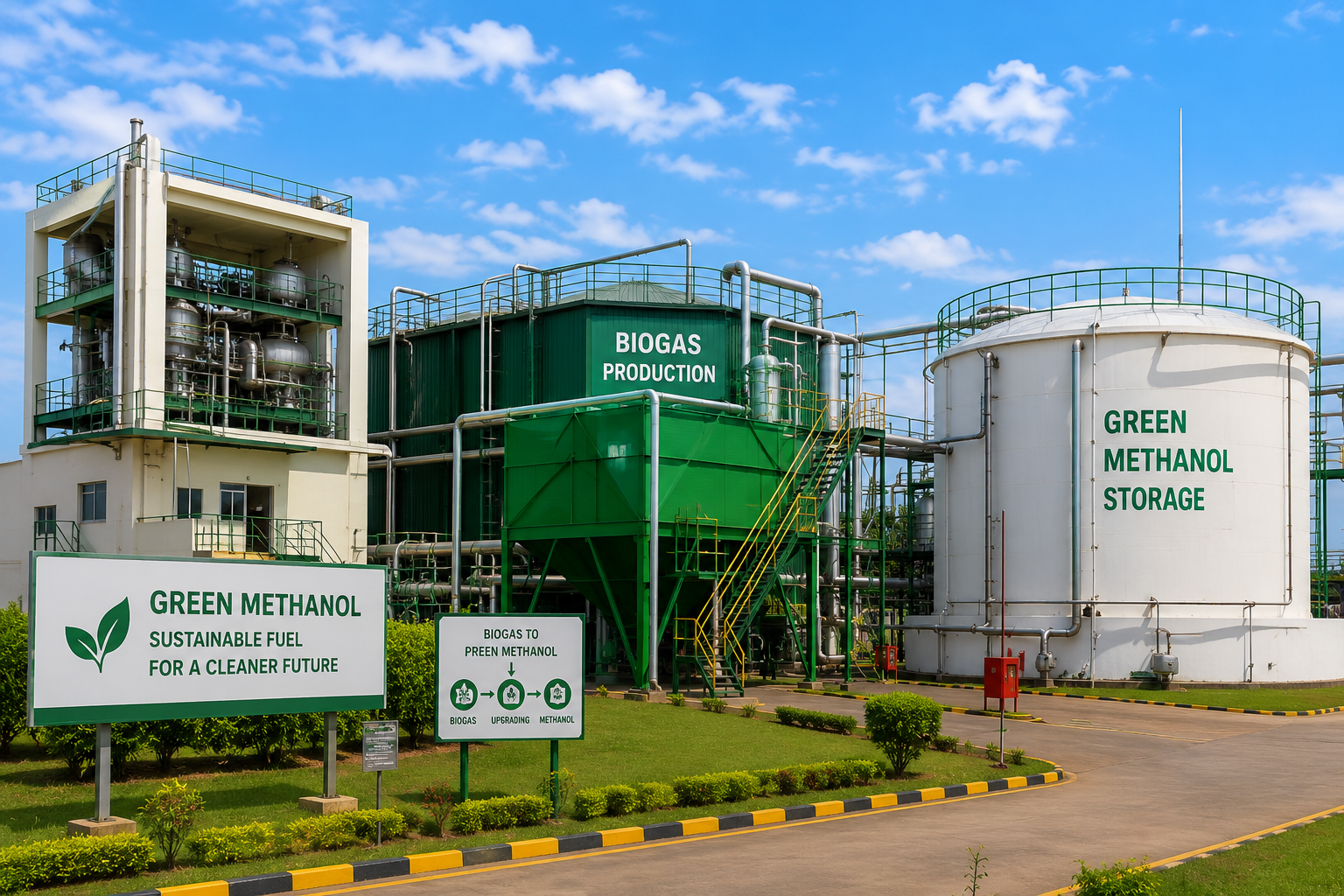
Green methanol production via a biological route — utilising in-house fermenter CO₂ and raw biogas.
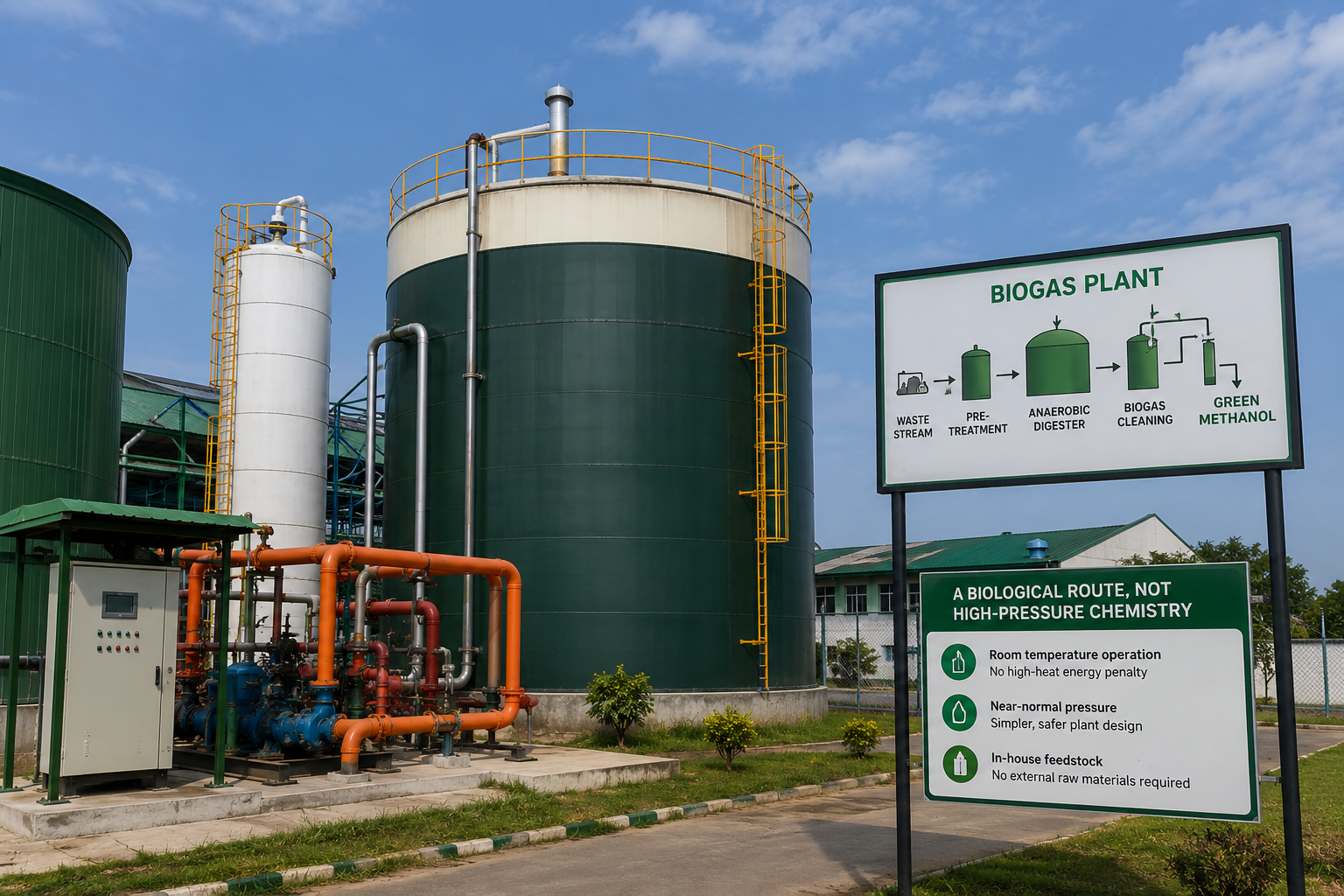
Conventional methanol is made by hydrogenating CO₂ at high temperatures and pressures. Our approach is fundamentally different: a biological route that operates at normal room temperature and almost normal pressure.
This unique process produces green methanol using materials already available within sugar and ethanol plants - turning waste streams into a valuable, low-carbon fuel and chemical feedstock.
Both raw materials are generated on-site at sugar factories and ethanol plants, so the process creates value from resources already available within the integrated facility.
Carbon dioxide released during fermentation becomes a primary raw material. A 30 KLPD green methanol plant utilises approximately 32 tonnes of fermenter CO₂.
Raw biogas generated within the plant serves as the second key raw material — feeding the biological conversion without any external fuel input.
Developed through R&D collaboration with IIT Guwahati.
A biological conversion route that runs under mild conditions — no high energy input, no toxic by-products.
Fermenter CO₂ and raw biogas are captured in-house at the ethanol complex.
The process runs at room temperature and near-normal pressure — no hydrogenation.
Clean, low-carbon methanol is produced as the primary product.
Significant quantities of protein-rich powder are recovered as a byproduct.
New revenue plus carbon-reduction benefits on the path to net-zero.
The primary product — a clean liquid fuel and industrial chemical feedstock produced under mild, biological conditions.
A valuable co-product recovered in significant quantities alongside the green methanol, adding a second revenue stream.
The projected financial model is based on a 30 KLPD green methanol plant integrated with a 200 KLPD ethanol plant. Integration allows the plant to utilise the fermenter CO₂ and raw biogas generated within the ethanol complex.
Around ₹35 Crore out of the Rs.75 crore turnover is paid back to the parent ethanol company for the supply of fermenter CO₂ and raw biogas — sharing value across the integrated facility.
| Projected Financials | 30 KLPD Model |
|---|---|
| Annual turnover | > ₹75 Crore |
| Profit After Tax (PAT) | ~ ₹20 Crore |
| Paid back to parent ethanol co. | ~ ₹35 Crore |
| Opportunity cost — CO₂ | ₹10 / kg |
| Opportunity cost — raw biogas | ₹30 / m³ |
| Fermenter CO₂ utilised | ~ 32 tonnes |
Green methanol can be converted into Dimethyl Ether (DME), which blends with LPG by up to 20% — a major domestic decarbonisation opportunity.
Active demand from the European Union, with live tenders for the procurement of green methanol at premium prices.
A base material for established derivatives including formaldehyde and formic acid — expanding industrial demand.
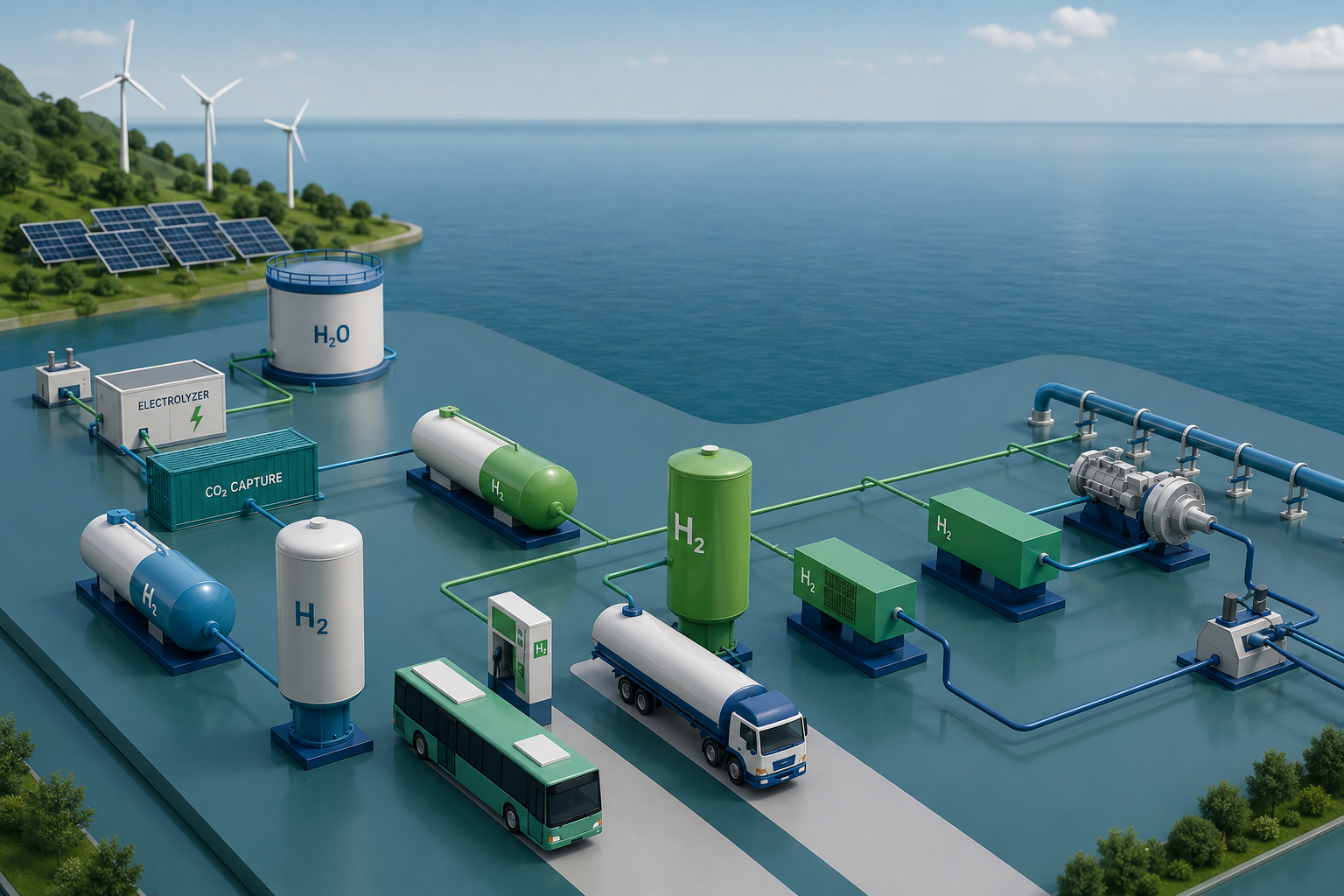
Beyond fuel and chemicals, green methanol is a strategic hydrogen carrier — a stable, transportable liquid that offers real advantages for future fuel infrastructure.
As economies build out hydrogen supply chains, methanol provides a practical way to store and move hydrogen energy without the handling challenges of gaseous hydrogen.
On 28 May 2026, Kaashyap CleanTech Innovations signed an MoU with IIT Guwahati for the large-scale commercialisation of its biological bio-methanol technology - encouraged by ISMA and the Government of India's Department of Food & Public Distribution.
A two-stage biological process using chemoautotrophic bacteria converts methane and CO₂ into bio-methanol — cutting engine emissions by up to 87%.
Read the article → IIT Guwahati · VijñāptiThe technology developed by Prof. Debasish Das and Krishna Kalyani Sahoo moves from the laboratory to large-scale industrial deployment.
Read the newsletter → Kaashyap BlogHow green methanol supports decarbonisation across steel, cement and ethanol — and why it qualifies for carbon-credit schemes.
Read on our blog →Kiran KK · Managing Director, Kaashyap Group
Let's explore how CleanTech Innovations can support your operations.