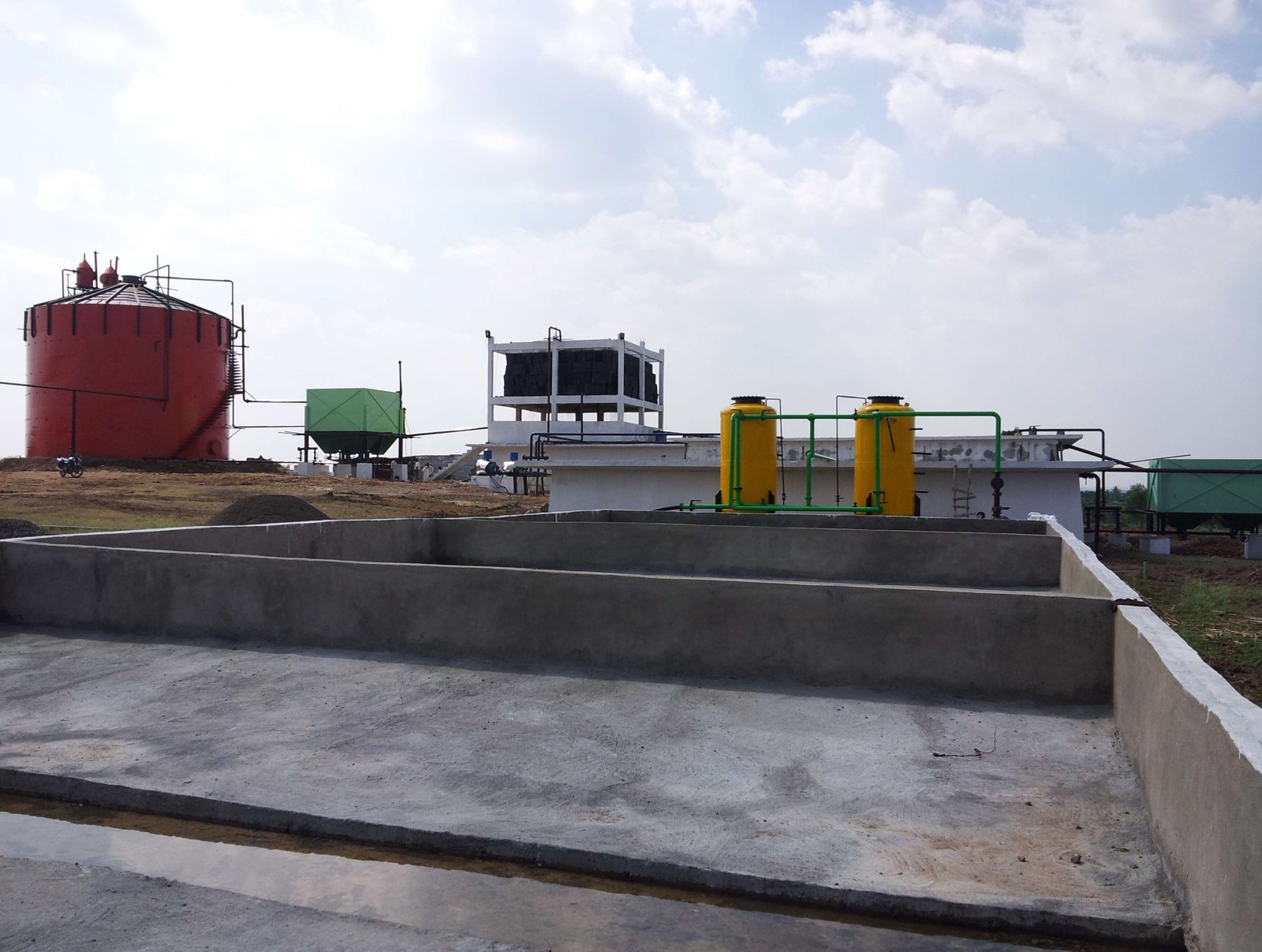
Every tonne of sugar India produces leaves behind a trail of by‑products. Two of them — press mud and spent wash — were long treated as disposal headaches. Today they are among the most attractive feedstocks for Bio‑CNG, turning a pollution problem into a profit centre.
What are press mud and spent wash?
Press mud (or press cake) is the soft, fibrous residue left after sugarcane juice is filtered. Spent wash is the high‑strength liquid effluent from attached distilleries. India produces an estimated 8–10 million tonnes of press mud per year; a typical 3,500‑tonnes‑per‑day mill alone generates around 100–125 tonnes of press mud daily.
From a problem to a resource
Left unused, press mud piles up, blocks drains and pollutes waterways, while spent wash is one of the most polluting industrial effluents by COD load. But both are rich in biodegradable organic matter — which is exactly what an anaerobic digester needs. As Mongabay India reports, sugar mills are increasingly central to India's cleaner‑fuel transition.
Key takeaways
- India generates 8–10 million tonnes of press mud annually — a vast, under‑used feedstock.
- Anaerobic digestion converts press mud & spent wash into Bio‑CNG plus organic fertiliser.
- Sugar‑dense states like Maharashtra, UP and Karnataka are natural CBG hubs.
How the process works
The route from waste to fuel follows four steps:
- Feedstock intake — press mud and spent wash are collected and conditioned.
- Anaerobic digestion — high‑rate digesters break down the organics, releasing methane‑rich biogas.
- Upgrading — the biogas is purified and compressed into Bio‑CNG (CBG).
- Fertiliser recovery — the digestate becomes a high‑quality organic manure, superior to raw press mud.
The bio-circular economy
This is a textbook circular economy: a mill's waste becomes its own clean fuel and a saleable fertiliser, while cutting emissions and disposal costs. With CBG demand now backed by a blending mandate (see our Bio‑CNG & SATAT guide), the business case is stronger than ever.
Kaashyap's track record
We have delivered exactly these projects — including biogas capture from sugar‑factory effluent and first‑of‑their‑kind digesters. See our commissioned projects and wastewater & biogas services.